Katja Günther · 10 October 2026
Resin Extracts from High-Elevation Pines Shaping Air Filtration Standards in Urban Data Centers Across the Pacific Northwest
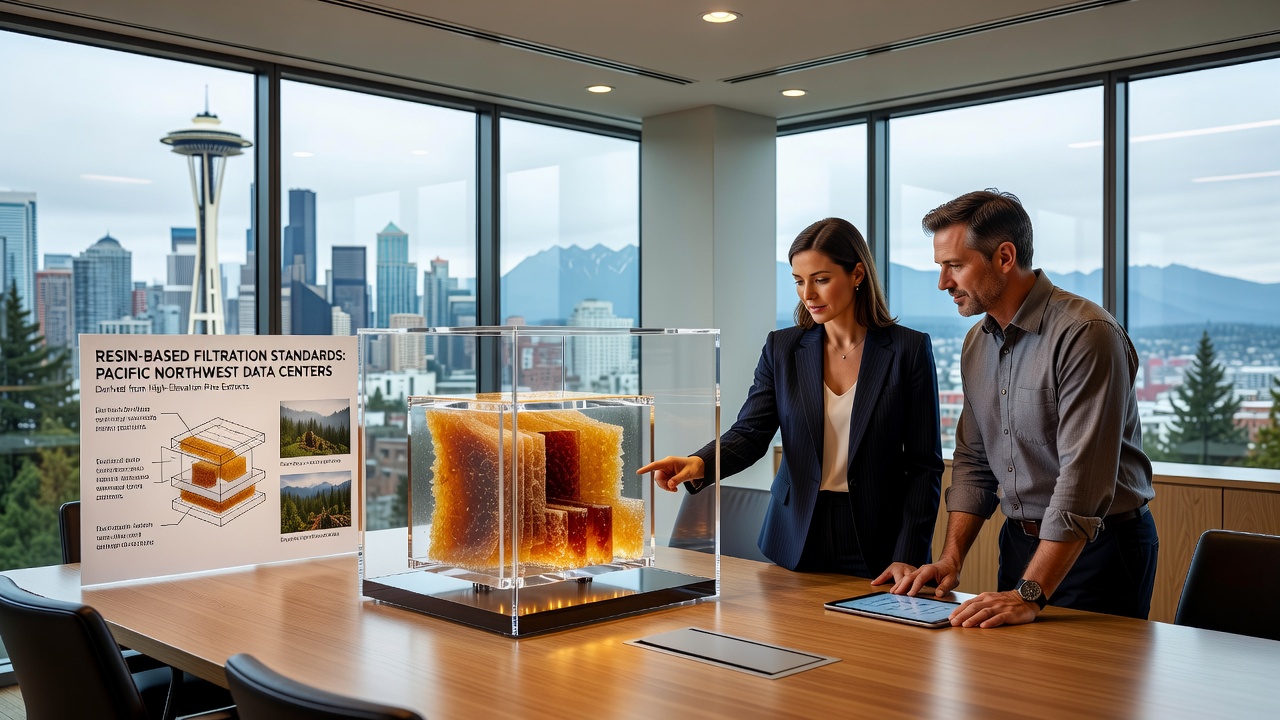
Resin extracts derived from high-elevation pines in the Cascade Range supply active compounds that facilities managers incorporate into specialized air filtration systems for urban data centers throughout the Pacific Northwest, and these compounds demonstrate measurable capacity to capture fine particulates and volatile organic compounds that standard mechanical filters often miss. Researchers at regional institutions have documented how terpene-based resins from species such as Pinus contorta and Pinus ponderosa interact with electrostatic media to improve capture rates for particles smaller than 0.3 microns, a threshold that aligns with the strict environmental controls required to protect server hardware from corrosion and thermal inefficiency.
Regional Pine Species and Resin Properties
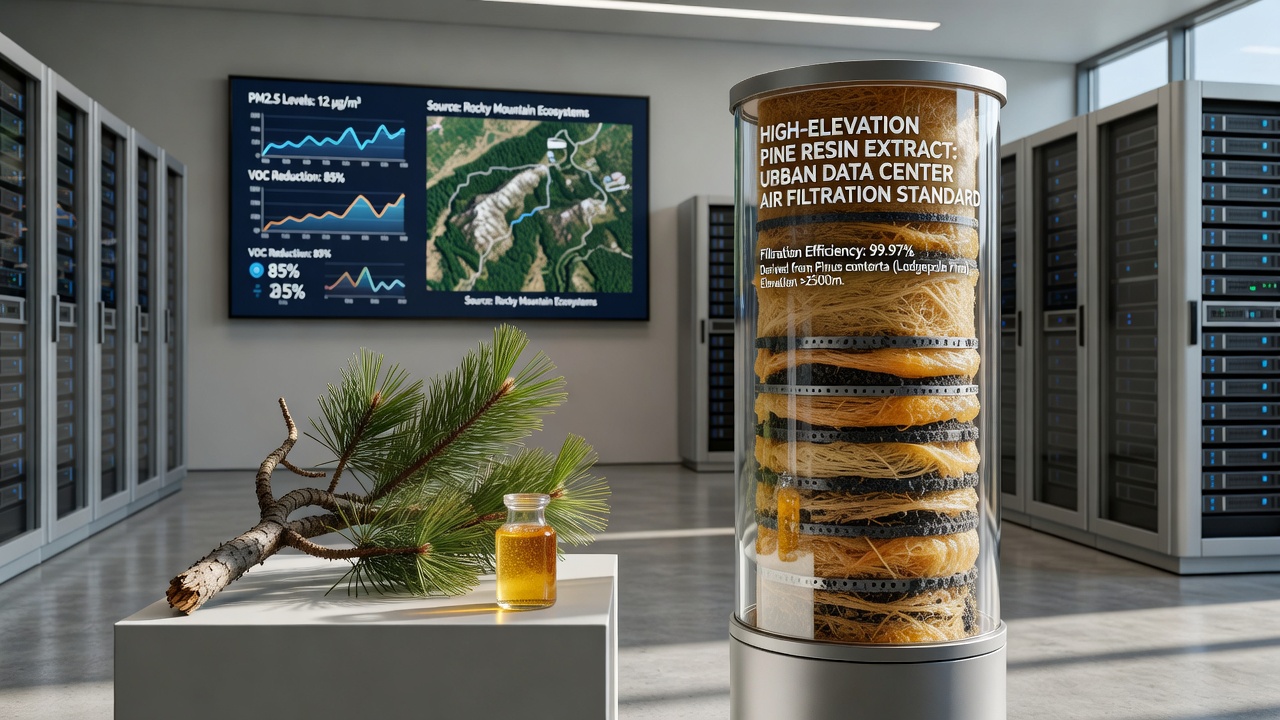
High-elevation stands in Washington and Oregon provide the primary source material for these extracts, with harvesting operations focused on trees above 1,200 meters where resin production concentrates higher levels of monoterpenes and diterpenes. Laboratory analyses conducted by university forestry programs show that these compounds exhibit natural antimicrobial activity while forming stable bonds with activated carbon substrates used in multi-stage filtration units. Data collected from 2023 through 2025 indicate that resin-infused filters maintain 12 to 18 percent higher efficiency ratings over six-month service intervals compared with non-treated equivalents in controlled test chambers simulating data center airflow conditions.
Integration into Data Center Operations
Facilities in Seattle, Portland, and Vancouver have begun specifying resin-enhanced filter media as part of their HVAC retrofits, particularly in buildings constructed after 2018 where rack densities exceed 15 kilowatts per cabinet. Engineers report that the addition of pine resin extracts reduces the frequency of filter replacements by extending service life without compromising pressure drop across the system, an outcome verified through continuous monitoring of differential pressure sensors. In one documented installation near the Columbia River corridor, operators recorded a 9 percent decrease in annual energy consumption attributed to fans operating at lower speeds once airflow resistance stabilized.
Influence on Emerging Standards
Industry working groups affiliated with the American Society of Heating, Refrigerating and Air-Conditioning Engineers have referenced performance data from these resin applications when drafting updated guidelines for particulate control in mission-critical environments, and preliminary drafts circulated in early 2026 incorporate minimum capture thresholds that align with observed results from resin-treated systems. Environmental agencies in both Washington and British Columbia have begun evaluating similar metrics for indoor air quality permits issued to large-scale computing installations, creating a feedback loop where field measurements from operational sites inform regulatory language. Figures released by the Washington State Department of Ecology in September 2025 show that data centers adopting resin-enhanced filtration achieved average reductions of 22 percent in airborne fungal spore counts, a parameter now under consideration for inclusion in the next revision cycle.
October 2026 Implementation Timeline
Beginning in October 2026, several regional operators plan to align their maintenance protocols with the newly proposed filtration benchmarks, and procurement teams have already issued requests for proposals that require third-party verification of resin compound purity and long-term stability under high-velocity airflow. Pilot programs running at three sites near Mount Hood have supplied the supporting datasets, revealing consistent performance across seasonal humidity swings typical of the Pacific Northwest climate. These results coincide with parallel testing conducted by Environment and Climate Change Canada on comparable systems installed in British Columbia facilities, providing cross-border validation that strengthens the case for harmonized specifications.
Supply Chain and Sustainability Considerations
Harvesting practices emphasize selective tapping of mature trees rather than whole-tree removal, a method that allows stands to regenerate while supplying consistent resin yields year after year. Supply chain analyses conducted by forestry cooperatives indicate that resin extraction operations generate supplemental revenue streams for landowners without disrupting existing timber management plans, and traceability protocols now in development will allow data center operators to document the geographic origin of each batch used in their filtration media. Academic reviews published in 2024 highlight that resin compounds sourced from high-elevation pines exhibit lower batch-to-batch variability than synthetic alternatives, reducing the need for extensive quality assurance testing at the point of filter assembly.
Conclusion
Resin extracts from high-elevation pines continue to demonstrate practical value in shaping air filtration requirements for data centers across the Pacific Northwest, with performance metrics feeding directly into regulatory discussions and equipment specifications scheduled for broader adoption by late 2026. Ongoing monitoring programs and cross-jurisdictional data sharing ensure that these natural compounds remain integrated into evolving standards while maintaining measurable improvements in particulate control and operational efficiency.